The Doctrine of
Discipline

What is this?
This is not self-help. This is not motivation. This is doctrine.
Doctrine is law. It does not negotiate. It does not flex. It does not care if you agree.
You either install the system or you don't.
The series moves through four stages: individual mastery, principled leadership, institutional mentorship, and transformational community. Each book builds on the last. Each demands more than the one before.
This is not a book you read. It is a system you install.
Five Books. One Doctrine.
Five stages. Self to system. Each demands more than the last.
Thirteen governing laws. Fifteen chapters. Twenty-five centuries. Thirty-nine historical exemplars. The operating system.
Where to Buy →Paperback and Kindle available on Amazon
You mastered yourself. Now lead others. Case studies of those who held the line when it cost them everything.
Apprenticeship over education. Sponsorship over networking. The academy model.
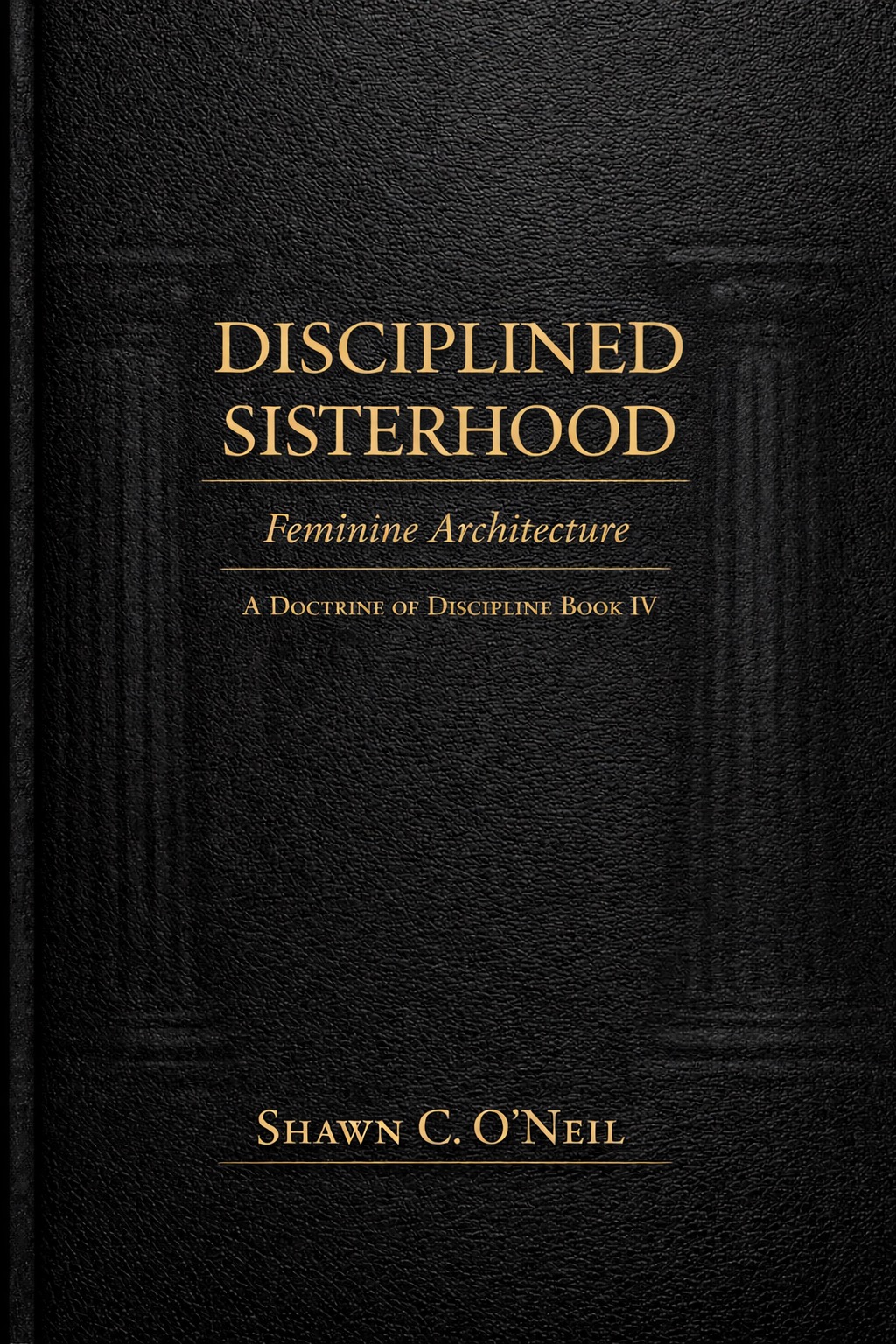
The doctrine expands. A new voice. The same non-negotiable standard. Co-authored with Ovi Black.
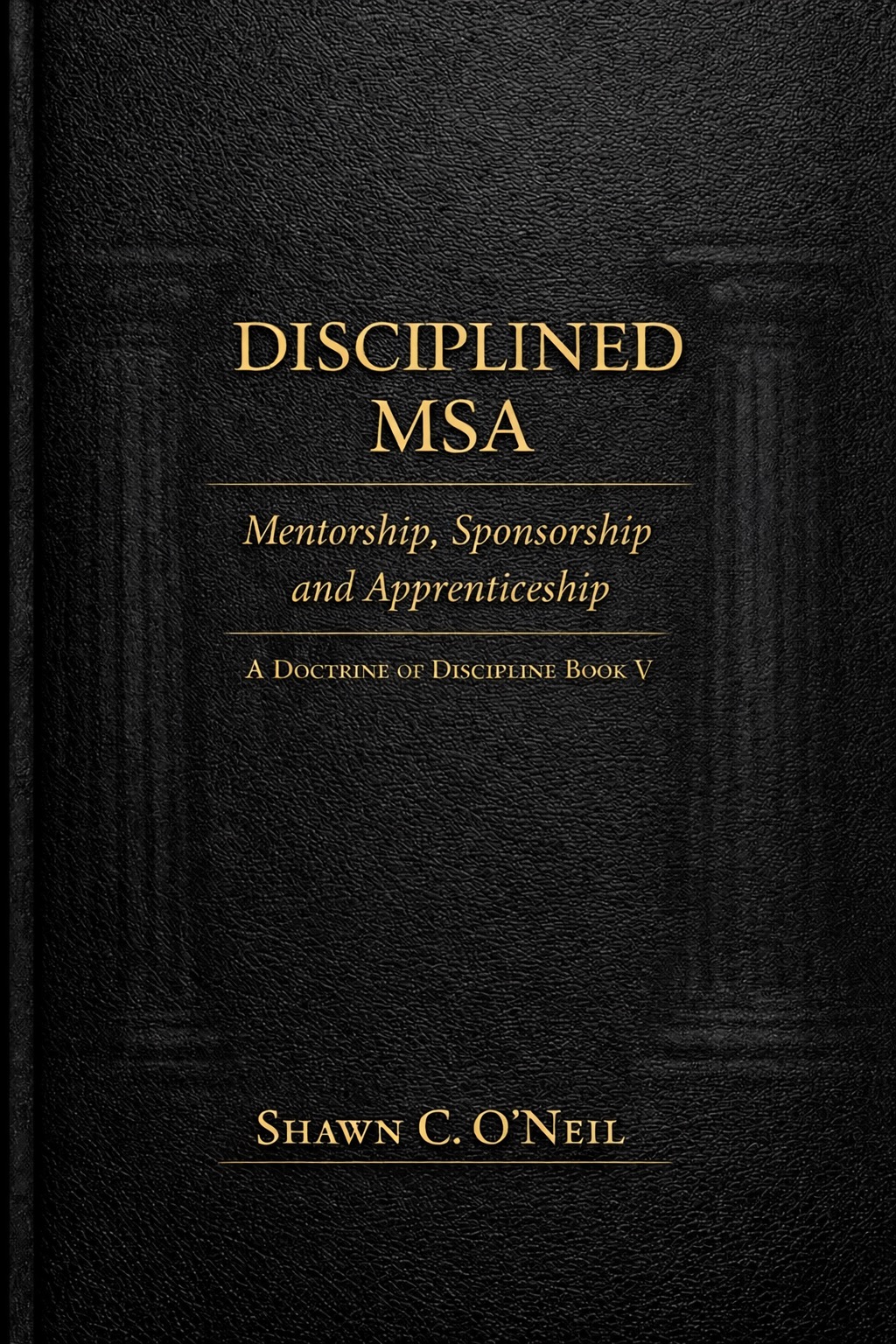
The doctrine becomes architecture. Master Service Agreements. The governing document for disciplined institutions.
Happy Birthday Marines. Semper Fi.
You do not rise to the level of your goals. You fall to the level of your systems.
Who is this for?
This is not for everyone.
If you need motivation, look elsewhere. Motivation is temporary. It burns out.
This is for the person who has tried everything else and is still standing. The one who knows that what they are missing is not desire — it is structure.
You do not need another book. You need a system. You need law. You need something that does not negotiate with your comfort.
If that is you, read.
Why this exists
We are surrounded by content designed to make people feel better temporarily. This is designed to make people operate better permanently.
Discipline is not a personality trait. It is not genetic. It is not reserved for the military or the monastic. It is an operating system. Like any operating system, it can be installed, configured, and maintained.
This series is the installation manual.
Discipline is not the absence of desire. It is the architecture of purpose.
— The XIII Pillars, Shawn C. O'NeilWhere this stands
The personal development market is a $53 billion industry. Thousands of titles compete for attention. Most offer motivation. Some offer frameworks. Almost none offer doctrine.
Here is how The XIII Pillars compares to the most recognized titles in the space.
Discipline Doctrines
| Title | Author | Pages | Ebook | What It Covers |
|---|---|---|---|---|
| The XIII Pillars | Shawn C. O'Neil | 428 | $14.99 | Complete discipline doctrine. 13 pillars. 39 exemplars. 25 centuries. Philosophy + framework + lived experience. |
| Atomic Habits | James Clear | 319 | $11.99 | Habit mechanics. Tells you how to build habits but not what to build your life around. |
| Can't Hurt Me | David Goggins | 364 | $13.99 | Memoir. One man's extreme story. Inspires but does not systematize. |
| 12 Rules for Life | Jordan Peterson | 432 | $13.99 | Academic psychology. Dense, intellectual. Written from the clinic, not the battlefield. |
| 7 Habits | Stephen Covey | 432 | $13.99 | Corporate effectiveness. Timeless but dated. Does not address sacrifice, resilience, or endurance. |
| Discipline Equals Freedom | Jocko Willink | 199 | $15.99 | Motivational field manual. Short, punchy. Pocket card, not doctrine. |
| Extreme Ownership | Willink & Babin | 384 | $14.99 | Leadership principles. Ownership is one pillar. This covers all thirteen. |
| The Obstacle Is the Way | Ryan Holiday | 224 | $14.99 | Modern Stoicism. Interprets the ancients. O'Neil writes his own doctrine. |
| Man's Search for Meaning | Viktor Frankl | 188 | $14.99 | The philosophical why. Delivers meaning, not an operating system. |
The Proof Mechanism
The critical distinction is not exemplar count. It is not depth. It is function.
In the competitive set, historical figures appear as illustration. The author makes the argument. A figure confirms it. Remove the figure and the argument persists unchanged. The figure is rhetorical decoration.
In The XIII Pillars, historical figures constitute the argument. Each pillar is reinforced by three exemplars, mapped across civilizations and deployed to demonstrate that the law operates independent of era, culture, or personality. The proof is structural — and redundant by design.
This is the architectural distinction that separates doctrine from advice.
The 39-Exemplar Advantage
Thirty-nine figures. Not the same recycled names. Not the same Western canon. A deliberately underdeployed roster spanning six continents and twenty-five centuries of human civilization.
Comparable Range
Ancient Greece, the Roman Empire, feudal Japan, colonial Latin America, Victorian Britain, apartheid South Africa, the Antebellum American South, Renaissance Italy, Soviet Russia, and the United States military across multiple eras. No competitor achieves comparable civilizational range. There is no cultural exemption available.
The author's role is cartographer, not prophet. The map is accurate regardless of who drew it.
— Competitive Market Analysis, 2026The XIII Pillars is not author-dependent. The doctrine's authority derives from the historical record — not the author's credentials, not his biography, not his brand. Challenge the author and the book's authority remains unchanged. These facts exist independent of anything the manuscript's author has or has not accomplished.
Motivation is a spark. Discipline is the engine. Doctrine is the blueprint.
Shawn C. O'Neil
United States Marine Corps. Combat veteran. Service-connected disabled veteran. Two deployments. Afghanistan.
Built a seven-figure consulting practice advising across capital markets, real estate, and strategic operations. Personally responsible for over $1.6 billion in deal flow spanning mortgage origination, investment capital, and structured transactions.
At twenty-six, built a mortgage operation that produced seven million dollars a month across fifty states. By twenty-eight, the 2008 financial collapse erased two million dollars in personal assets. Reenlisted. Deployed to a combat zone. Came home with permanent injuries. Rebuilt from nothing. Again.
Founded the Fortitude Ecosystem — a platform for veteran empowerment, disciplined living, and generational wealth-building. Built Black Haus Capital, an investment firm operating across multiple asset classes. Established SCO Consulting for high-level strategic advisory.
The Doctrine of Discipline is not a theory written from comfort. It is the operating system that rebuilt a life from wreckage — twice. Every pillar was forged under fire, tested under pressure, and proven in the field.
This is not philosophy from a professor. This is doctrine from a combat veteran and seven-figure operator who lost everything, went to war, and built it back bigger.